Engine Library
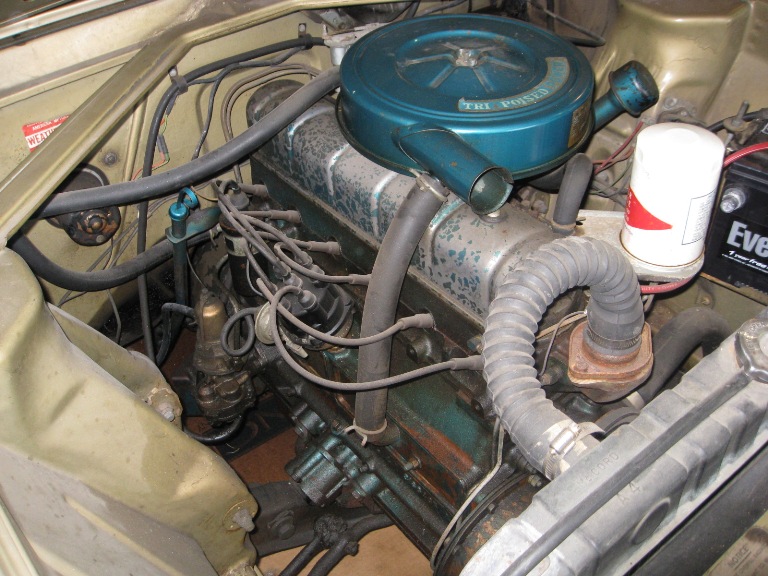
Nash 195.6 OHV Six engine
Nash 195.6 OHV Six enginePhoto: AP-1630 · CC BY-SA 4.0

Nash · Rambler OHV Six

Nash 195.6 OHV Six

The 1956 overhead-valve conversion that modernized Nash's long-running compact six.

Nash converted the 195.6 from side valves to an overhead-valve head for 1956, substantially improving breathing without abandoning the established bottom-end dimensions.

Key variants

All variants1956 Nash/Rambler 195.6 OHVLater AMC/Rambler OHV 195.6

Displacement

195.6 ci

Bore

3.125"

Stroke

4.25"

Years

1956–1957 Nash-branded Rambler era

Key Takeaway

The OHV 195.6 retained the proven 3.125 x 4.25-inch bottom-end dimensions but moved the valves into the cylinder head. The change substantially improved breathing and output without forcing Nash to discard the familiar long-stroke short-block.

Technical Specifications

Compression
7.47:1 in documented 1956 specification
Horsepower
120 hp @ 4200 rpm in documented 1956 specification
Torque
170 lb-ft @ 1600 rpm
Architecture
OHV inline six
Block
Cast iron
Cylinder heads
Cast iron
Valvetrain
Pushrod OHV
Aspiration
Naturally aspirated
Fuel delivery
Carbureted
Firing order
1-5-3-6-2-4

The OHV 195.6 retained the proven 3.125 x 4.25-inch bottom-end dimensions but moved the valves into the cylinder head. The change substantially improved breathing and output without forcing Nash to discard the familiar long-stroke short-block.

Internal Specifications

Variant-specific values are labeled. Engine families that span multiple years or RPOs can have different heads, cams, induction and rotating parts, so the exact code/year always takes priority.

Identification & Output

Engine codes / RPO
1956 195.6 OHV six — later AMC-era serial prefixes vary by year and carburetion; identify exact engine by stamped serial/date and induction setup
Casting numbers
The OHV 195.6 shares bore/stroke with the flathead but uses a different head/valvetrain/oiling arrangement. The reviewed sources do not support one universal casting number for every 1956–1965 OHV engine.
Power rating
Period brake horsepower / SAE gross-era rating
Horsepower RPM
120 hp @ 4200 rpm in documented 1956 specification
Torque RPM
170 lb-ft @ 1600 rpm in documented 1956 specification

Operating Specs

Production notes
For 1956 Nash converted the 195.6 to overhead valves while retaining the 3.125 x 4.25-inch bore/stroke. The 1956 version still used the earlier side-mounted water-pump arrangement; a front-mounted pump followed in 1957.

Compatibility Notes

  • The OHV and L-head 195.6 share displacement but are not simple top-end-interchange engines; oiling, cooling, head, valvetrain and external hardware differ.
  • Manual- and automatic-transmission versions can differ at the crank/flywheel interface; verify the donor engine and transmission before planning interchange.

Notable Applications

1956 Nash Rambler1957 Nash Rambler

Strengths

  • Improved breathing over flathead version
  • Good low-speed torque
  • Direct bridge into AMC's later 195.6 family

Weaknesses / Watch-outs

  • Long-stroke architecture remains rpm-limited
  • Early water-pump arrangement differs from later versions
  • Specialist parts market

Common Upgrades

  • Electronic ignition
  • Improved carburetion
  • Exhaust upgrades

Racing History & Legacy

The OHV 195.6 was engineered primarily to improve everyday Rambler performance rather than as a factory race engine. Nash/AMC’s better-documented international competition record belongs to the larger Ambassador-derived Nash-Healey engines.

The OHV 195.6 was AMC’s first straight-six continuation of Nash engineering and bridged the company from flathead economy engines toward later overhead-valve AMC six-cylinder families.

Key Factory / Build Variants

1956 Nash/Rambler 195.6 OHV

1956

120 hp @ 4200 rpm; 170 lb-ft @ 1600 rpm

First OHV conversion of Nash’s long-running 195.6 family
Later AMC/Rambler OHV 195.6

1957–1965

Application/carburetion dependent

Continued development with revised front-mounted water pump and later one-/two-barrel calibrations

Engineering Notes Worth Knowing

01

195.6 cu in / 3.2 L with 3.125 x 4.25-inch bore and stroke.

02

Cast-iron pushrod OHV inline-six.

03

Carbureted and naturally aspirated.

04

Documented 1956 output: 120 hp and 170 lb-ft.

History · context · related reading

The Story Behind Nash 195.6 OHV Six

Nash modernized its long-running 195.6 by changing the cylinder head rather than starting over. The OHV conversion delivered a major performance gain and carried Nash engineering directly into the early AMC years.

TorqueList Garage Reference Series

See this engine inside the full Nash reference catalog.

The same Engine Library data now powers a more detailed mobile-friendly catalog with technical specs, variants, engineering notes, history and related stories.

Legal & Disclosures

TorqueList may earn a commission when users buy through qualifying links. This does not change the price users pay.

Prices, availability, and fitment may change. Always verify fitment, emissions legality, and price with the retailer/manufacturer before buying.

TorqueList is not affiliated with or endorsed by vehicle manufacturers, parts brands, or retailers unless clearly stated.

© 2026 TorqueList. All rights reserved.